

EMR implementation ultimately comes down to the people using it. The shift from paper records to digital systems needs to be accepted by the people expected to use them. Only then can the transition be successful. While using a system to manage hospital records is easier than maintaining everything on paper, the operational shift can suddenly put staff under pressure. They need to learn how the system works, adapt to new workflows, and then incorporate it into their daily responsibilities.
Everyone is talking about technological advancements, but few consider how this shift will affect the people using the technology. Medinous understands this challenge and focuses on staff training alongside technological improvements. This helps healthcare teams become more comfortable with the system and adapt to new ways of working. This blog explores why training matters, the common hurdles teams face, and how to build a training approach that supports long-term EMR adoption in healthcare.
Why Staff Training Matters for EMR Implementation
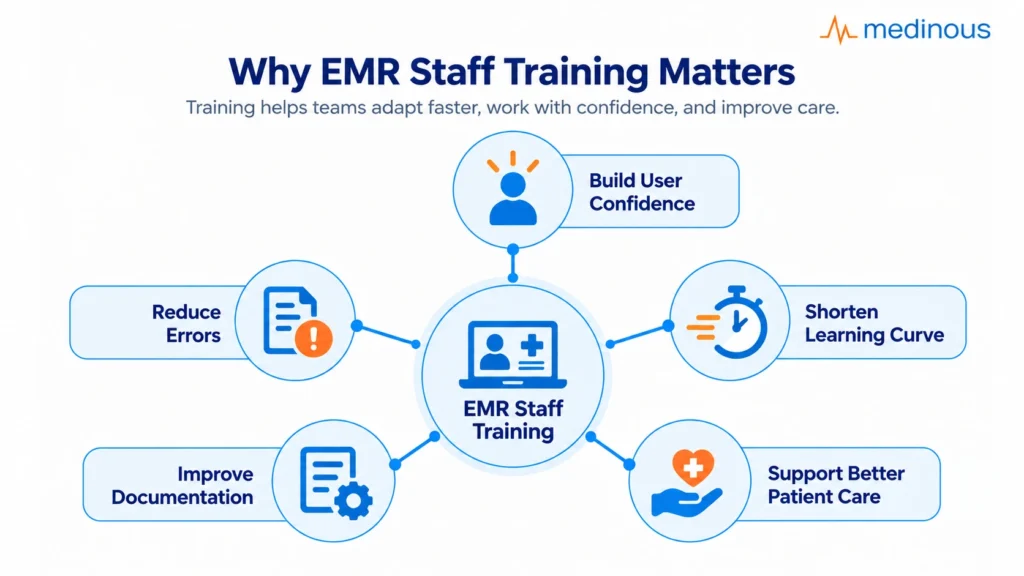
Comprehensive training gives staff the confidence and skills to navigate a new system without disruption to patient care. Research on hospital rollouts has shown that when training is inadequate, staff often revert to old paper-based habits, which undermines the very benefits the system was meant to deliver. In other words, the software can be excellent, but if the people behind it are not comfortable, the organization will not see the return it expected.
Good training also reduces documentation errors, shortens the learning curve, and helps staff feel like partners in the transition rather than people the change is worked on. When everything is planned well, medical staff training for EMR becomes less about memorizing screens and more about building a workflow that fits how your teams already think and work.
Understanding the Challenges of EMR Adoption
EMR adoption has a lot of challenges. Let us first understand them before we find reliable solutions to the challenges.
Resistance to New Workflows
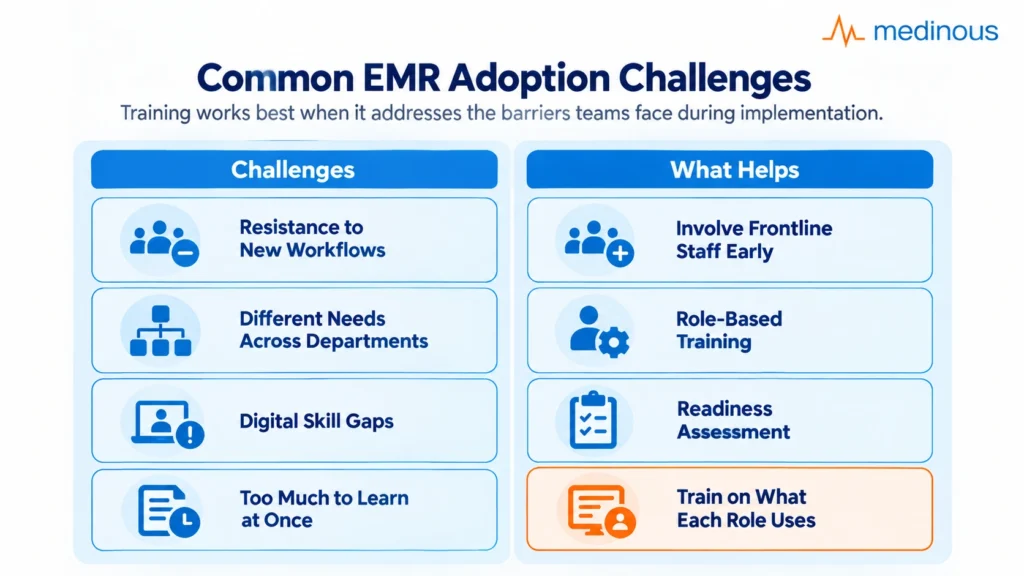
It is natural for clinical and administrative staff to feel uneasy about a system that changes how they have worked for years. Consultants who specialize in EMR rollouts often point out that one of the most damaging mistakes practices make is overlooking nursing staff during planning, since nurses are frequently the heaviest daily users of the systems. Involving frontline staff early, listening to their concerns, and showing them tangible benefits goes a long way toward reducing pushback.
Different Training Needs Across Departments
A single, generic training session rarely works across a hospital. Physicians need training centered on clinical documentation, while administrative staff need to understand scheduling, registration, and how the EMR system connects with billing and insurance processes.
Training tailored to each user role helps staff focus on the features, workflows, and processes relevant to their responsibilities. Trying to learn everything at once can create confusion, overwhelm employees, and make it harder for them to adapt to the new system effectively.
Building an Effective EMR Training Plan
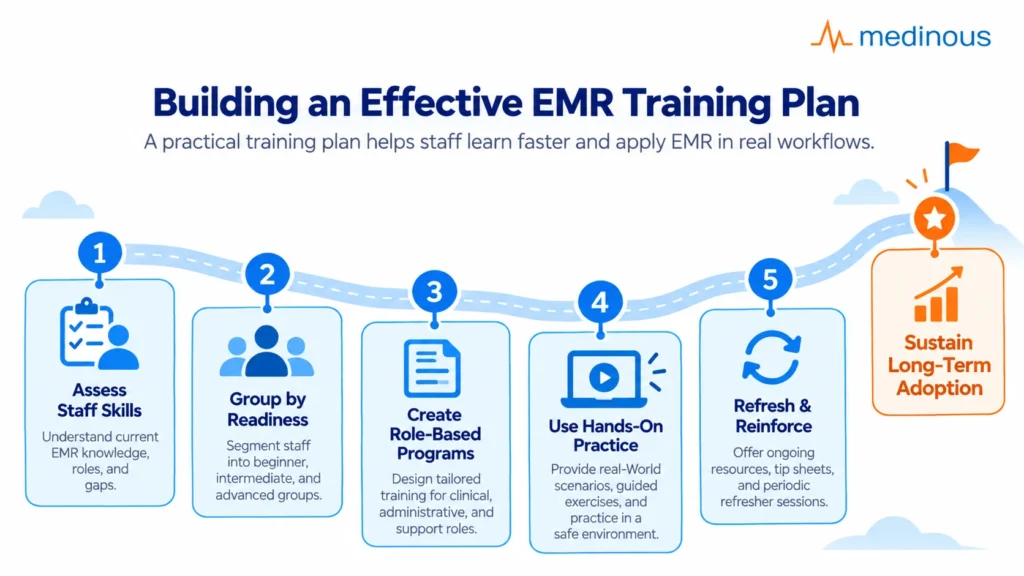
An effective EMR training plan will remove all these hurdles. A new system should feel useful, easy and time-saving. Hence, follow the below-mentioned training plan for an effective training process:
Assessing Staff Skills and Training Needs
Before designing any curriculum, it helps to understand where your staff currently stand. Some employees may already be comfortable with digital tools, while others are transitioning from a largely paper-based environment and need more foundational, hands-on instruction first. A quick skills assessment lets you group staff by readiness level so training time is used efficiently.
Creating Role-Based Training Programs
Rather than teaching every function to every employee, focus each session on what a specific role actually needs. This is called training people on only what they need rather than the entire system, since most staff use a fraction of an EMR platform’s full feature set in daily practice.
Nurses, physicians, lab technicians, and front desk staff should each receive a curriculum built around their specific responsibilities, including how the system supports patient records management.
Combining Hands-On Practice with Real Workflows
Reading a manual is not the same as using the system. Effective programs blend short instructional sessions with plenty of hands-on practice using realistic patient scenarios, so staff build muscle memory before they are working with real patients.
Continuous, tailored training that reflects each role, whether that is a physician documenting care or an administrator managing scheduling and billing, produces far better adoption outcomes than a single one-time session.
Preparing Staff for EMR To Go Live
After the training plan, the next step is to prepare the staff for the EMR to go live:
Conducting Mock Workflows and Practice Sessions
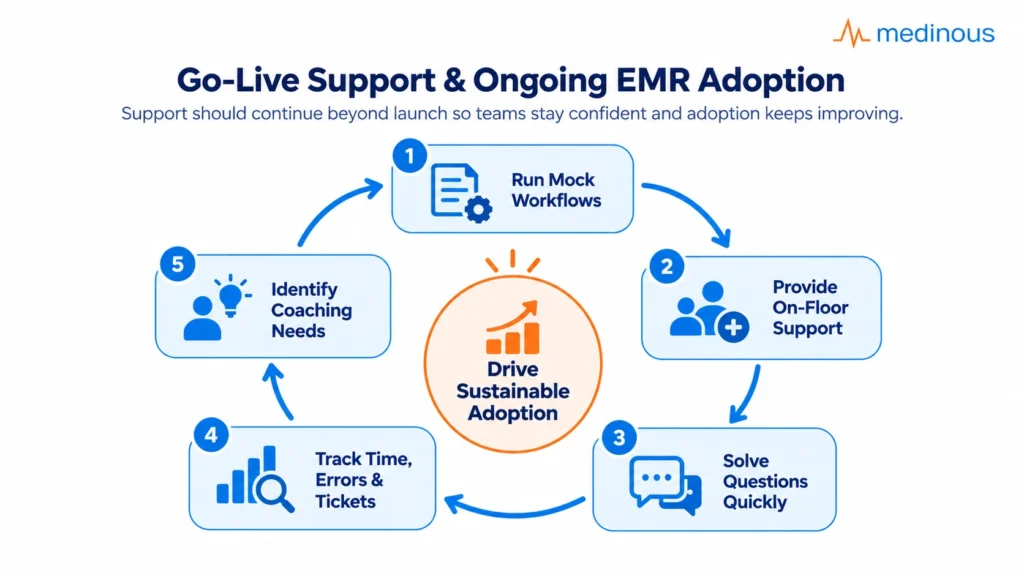
Before the system goes live, run full mock workflows that mirror an actual patient visit from check-in to discharge. This helps staff experience the system end to end and surfaces any confusion while there is still time to fix it. Practices that build in this kind of rehearsal tend to face fewer surprises on launch day.
Providing Support During the Transition
Even the best-trained staff will have questions once real patients are involved. Keeping trainers or super users available on the floor during the first days and weeks after go-live, described as hands-on IT support paired with clear communication, is consistently cited as a factor that separates smooth transitions from chaotic ones. A visible support system reassures staff that help is close by if something does not work as expected.
Measuring Training Success and User Adoption
Training should not end once the system goes live. Track metrics like documentation completion times, error rates, help desk tickets, and staff confidence surveys to understand where additional coaching is needed. If certain departments are still relying on workarounds weeks after launch, that is a signal to revisit their training rather than assume the problem will resolve on its own. Building in short refresher sessions when new features are added keeps the whole organization aligned as implementing an electronic health record system evolves.
It also helps to designate a small group of super users in each department who can act as the first point of contact for day-to-day questions. These champions reduce pressure on the IT team, speed up problem resolution, and often become the strongest advocates for the new system because they understand both the clinical workflow and the platform itself.
Over time, this peer support model tends to be more sustainable than relying solely on external trainers, since super users are always on site and familiar with the specific habits of their team.
Best Practices for Long-Term EMR Adoption
Here are a few of the best practices to be followed for long-term EMR adoption:
- Secure buy-in from leadership and frontline staff: Build genuine support before training begins, as no EMR rollout can succeed without visible commitment from the people leading and using the system.
- Combine internal and vendor expertise: Bring together the knowledge of your own staff with guidance from the software vendor instead of relying solely on one source of training.
- Schedule regular refresher training: Conduct periodic training sessions to reinforce existing skills, address knowledge gaps, and help new hires become familiar with the system.
Medical staff training for EMR is not a checkbox to complete before you go live. It is an ongoing investment that protects patient safety, staff morale, and the return your organization expects from its technology. When training is thoughtful, role-specific, and supported well beyond the first week, EMR adoption in healthcare becomes far more sustainable, and your team can focus on what matters most: delivering excellent patient care. At Medinous, our hospital management platform is designed with intuitive workflows that make staff training easier from day one.