
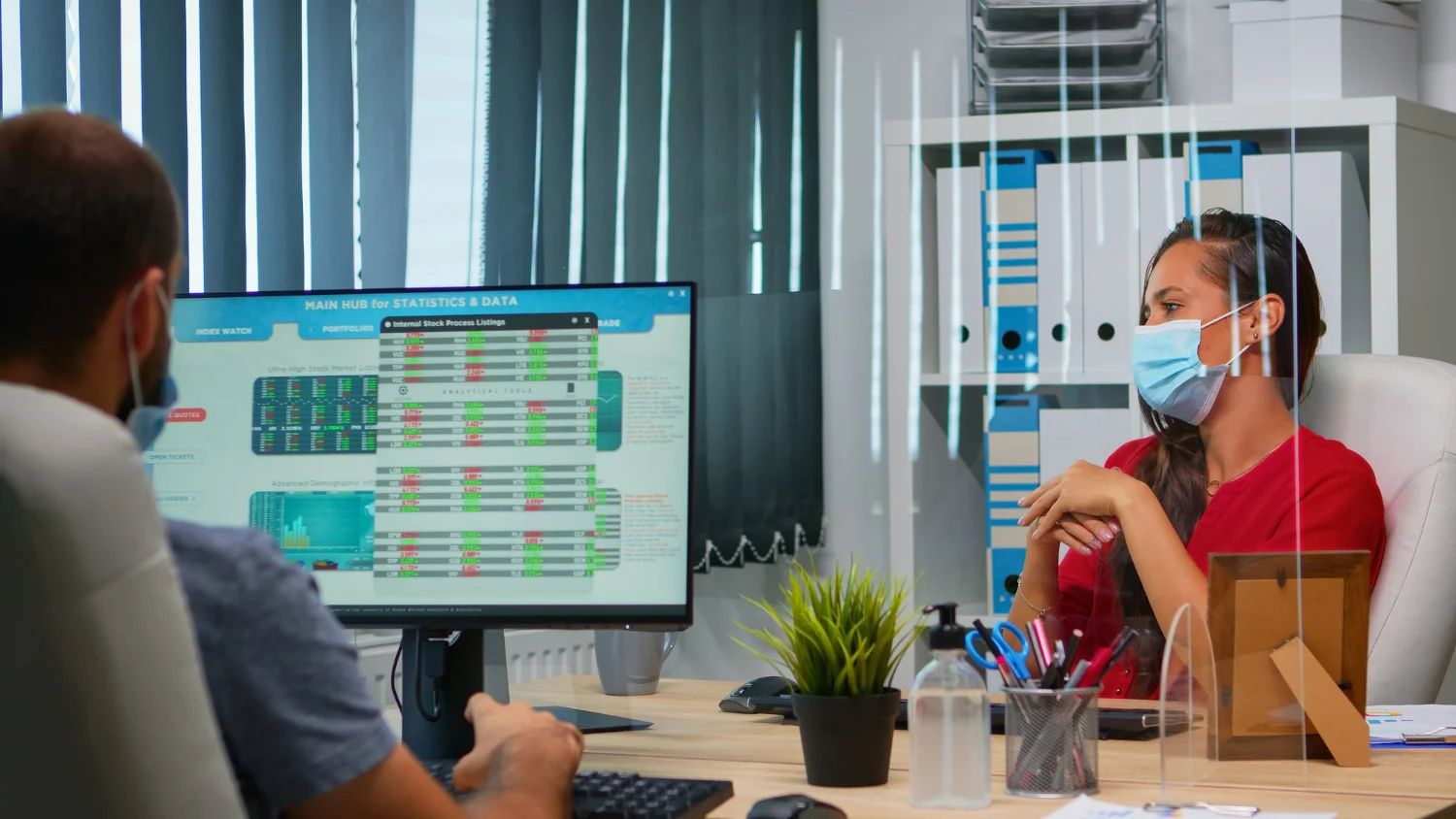
What is hospital revenue leakage and how much does it cost?
Hospital revenue leakage is the difference between revenue earned through clinical activity and revenue actually collected. It occurs through unbilled theatre procedures, untracked pharmacy dispensing, diagnostic underbilling, unauthorised discounting, appointment no-shows, and discharge without billing reconciliation. Studies estimate hospitals lose 8 to 12% of theatre charges through manual charge capture failures alone, with total leakage across all sources typically ranging from 10 to 20% of potential annual revenue.
The Revenue Your Hospital Has Already Earned — and Will Never Collect
Every hospital leader reviews monthly management accounts with care. Revenue is compared to budget. Expenses are scrutinised. Variances are explained. And yet some of the most significant financial losses a hospital sustains never appear on any report — because they represent revenue that was earned but never captured, billed but never collected, or written off so gradually that no single entry ever triggers concern.
Unlike cost overruns, which appear as numbers that are too large, revenue leakage appears as numbers that are simply smaller than they should be. Without benchmarked charge capture rates, billing-to-collection ratios, or departmental reconciliation data, there is no mechanism to know what you are losing.
“The most expensive losses in a hospital’s financial life are not the ones that show up on a report. They are the ones that never appear at all — revenue earned, never billed, never recovered.”
Six Forms of Hospital Revenue Leakage Running in Your Organisation Right Now
| Leakage Source | Estimated Revenue Impact (as % of potential) |
|---|---|
| Unbilled theatre and procedure charges | 8-12% of theatre revenue lost in manual charge capture environments |
| Pharmacy dispensing not charged to patient accounts | 3-6% of pharmacy revenue lost without perpetual inventory system |
| Laboratory and radiology underbilling | 2-4% of diagnostic revenue lost through under documented or underbilled orders |
| Unauthorised discounting without documentation | 1-3% of total revenue lost through informal untracked discounts |
| Appointment no-shows and unfilled capacity | 10-20% of specialist clinic daily revenue lost per no-show day |
| Discharge without billing reconciliation | Variable — can be significant in high-volume wards without digital discharge clearance |
Leakage 1: Unbilled Theatre and Surgical Procedure Charges
In an active operating theatre, clinical urgency drives every decision. Additional instruments are requested mid-procedure. Complications require a change of approach. More consumables are used than planned. In this environment, comprehensive charge documentation is never the priority — and every item not documented is an item not billed.
★ Key Insight: Studies in comparable healthcare environments estimate that 8 to 12% of theatre charges in manual hospital systems are never captured. For a hospital with meaningful surgical volume, this single category of revenue leakage is among the largest preventable financial losses in the entire organisation.
Leakage 2: Pharmacy Revenue Loss Through Untracked Dispensing
The pharmacy is simultaneously one of the most financially significant departments in a private hospital and one of the most vulnerable to revenue leakage. Drugs dispensed from wards without being charged to patient accounts. Medications signed out as ward stock never reconciled to individual bills. Items lost to expiry without formal documentation. Without a perpetual inventory system tracking every pharmaceutical item from purchase receipt to patient charge, pharmacy revenue leakage is structurally undetectable.
Leakage 3: Laboratory and Radiology Underbilling
Diagnostic departments are frequent sources of underbilling — through informal discounts applied without authorisation, urgent tests processed before payment is confirmed, or bundled diagnostic orders not fully itemised on the final bill. A monthly reconciliation between tests performed and tests billed surfaces this gap immediately and typically recovers meaningful revenue within the first month of implementation.
Leakage 4: Unauthorised Discounting Without Documentation
Informal discounts applied without authorisation — by clinical staff, ward managers, or reception teams — represent leakage that is both financially significant and, if normalised, culturally corrosive. Every discount should require documented authorisation at a defined seniority level, be recorded with a reason, and be reviewed monthly by the finance director.
Leakage 5: Appointment No-Shows and Unfilled Clinical Capacity
Every unfilled appointment slot is a unit of revenue permanently lost. A specialist clinic where 15 to 20% of booked patients do not attend forfeits that proportion of daily revenue every day. Automated appointment reminder systems, calibrated overbooking protocols, and same-day waiting list management collectively recapture a large share of this lost capacity without any increase in clinical staffing.
Leakage 6: Discharge Without Billing Reconciliation
In busy wards, the priority is patient flow — and finance comes last. Without a mandatory billing reconciliation step embedded in the discharge workflow, patients leave without signing off on charges, and follow-up becomes both administratively expensive and relationship-damaging.A centralized billing and insurance module can help connect clinical activity with charge capture, claims processing and reconciliation, reducing the gaps through which revenue is commonly lost
How to Build a Hospital Revenue Integrity Programme That Permanently Closes the Leaks
The hospitals that consistently outperform their financial peers are not always those with the most patients. They are the ones that capture the highest percentage of the revenue embedded in every patient encounter — by treating revenue integrity as an operational discipline rather than an annual audit.
◎ Case Evidence: A 320-bed tertiary hospital implementing Medinous Pharmacy Software with perpetual inventory tracking recovered 4.2% of previously untracked pharmaceutical revenue in the first quarter of operation. Combined with CPOE charge capture, total revenue recovery in year one exceeded 12% of the hospital’s previous annual leakage — delivering full HMS implementation ROI within 14 months.
“A hospital that captures 95% of its potential revenue does not need more patients than one capturing 75%. It is already generating 26% more revenue from the patients it already has.”

MEDINOUS IN PRACTICE
Medinous provides the operational infrastructure that hospital revenue integrity demands. The Pharmacy Software module tracks every pharmaceutical item from stock receipt to patient dispensing — closing the loop between cost and revenue capture. The Laboratory module and the Radiology Management module ensure every diagnostic service performed generates a corresponding billing record automatically. The Doctor’s Workbench with Computerised Physician Order Entry (CPOE) converts every clinical order into a real-time billing entry — removing the paper dependency that creates theatre leakage. For hospital finance leaders, this is structural revenue recovery, not marginal improvement.
✓ HOW-TO: Conduct a Hospital Revenue Leakage Audit
Step 1: Pull theatre procedure logs for the last quarter and reconcile against billing records. Calculate uncaptured procedures as a percentage of total — this is your theatre leakage rate.
Step 2: Run a pharmacy perpetual inventory reconciliation: total pharmaceutical purchases minus patient charges should equal current stock value. Any unexplained variance represents leakage.
Step 3: Compare laboratory and radiology test logs against billed items for the same period. Unbilled tests surface immediately.
Step 4: Review discount authorisation records for the last 90 days. Calculate the total value of discounts granted and verify each has documented authorisation.
Step 5: Analyse your appointment no-show rate by clinic and specialty. Calculate the revenue value of unfilled slots using average consultation revenue per specialty.
Frequently Asked Questions: Hospital Revenue Leakage
How do hospitals identify revenue leakage?
Hospitals identify revenue leakage through departmental charge capture audits, monthly reconciliations between services performed and services billed, pharmacy perpetual inventory reviews, and analysis of discount authorisation records. An integrated HMS with automated charge capture and real-time billing records makes this reconciliation continuous rather than periodic — surfacing leakage in real time rather than retrospectively.
What is the fastest way to reduce revenue leakage in a hospital?
The fastest high-impact intervention for hospital revenue leakage is implementing CPOE (Computerised Physician Order Entry) with automatic billing record generation. This closes the theatre and ward charge capture gap immediately and typically recovers 5 to 10% of previously unbilled revenue within the first quarter of operation. The second-fastest intervention is pharmacy perpetual inventory management, which closes untracked dispensing losses within 30-60 days.
What is charge capture in hospitals and why does it matter?
Charge capture is the process of converting clinical services — procedures performed, drugs administered, tests ordered, and supplies used — into billing records that can be included in a patient’s bill or insurance claim. Poor charge capture is the most common single source of hospital revenue leakage because items that are not captured in the billing record cannot be charged, regardless of whether they were clinically delivered. Hospitals with CPOE-integrated charge capture typically lose less than 2% of clinical activity to missed charges, compared to 8-12% in manual environments.
How often should hospitals conduct revenue leakage audits?
Hospitals should conduct comprehensive departmental revenue leakage audits quarterly at minimum. However, the most effective approach is continuous reconciliation enabled by an integrated HMS — where pharmacy inventory, diagnostic billing, and clinical charge capture are automatically cross-referenced daily, turning the annual leakage audit into a continuously updated real-time view rather than a retrospective discovery exercise.
What is a hospital revenue integrity programme?
A hospital revenue integrity programme is a structured, ongoing operational discipline — rather than a one-time audit — that designates a revenue integrity lead responsible for monthly reconciliations across pharmacy, laboratory, imaging, and theatre; tracks charge capture rates by department; monitors discount authorisation compliance; and reports revenue integrity metrics in the monthly leadership management review alongside clinical and operational KPIs.
Find out exactly how much revenue your hospital is leaving uncollected. Medinous provides the integrated platform to close every revenue leakage point — from theatre charge capture to discharge reconciliation. Request a revenue integrity review.