
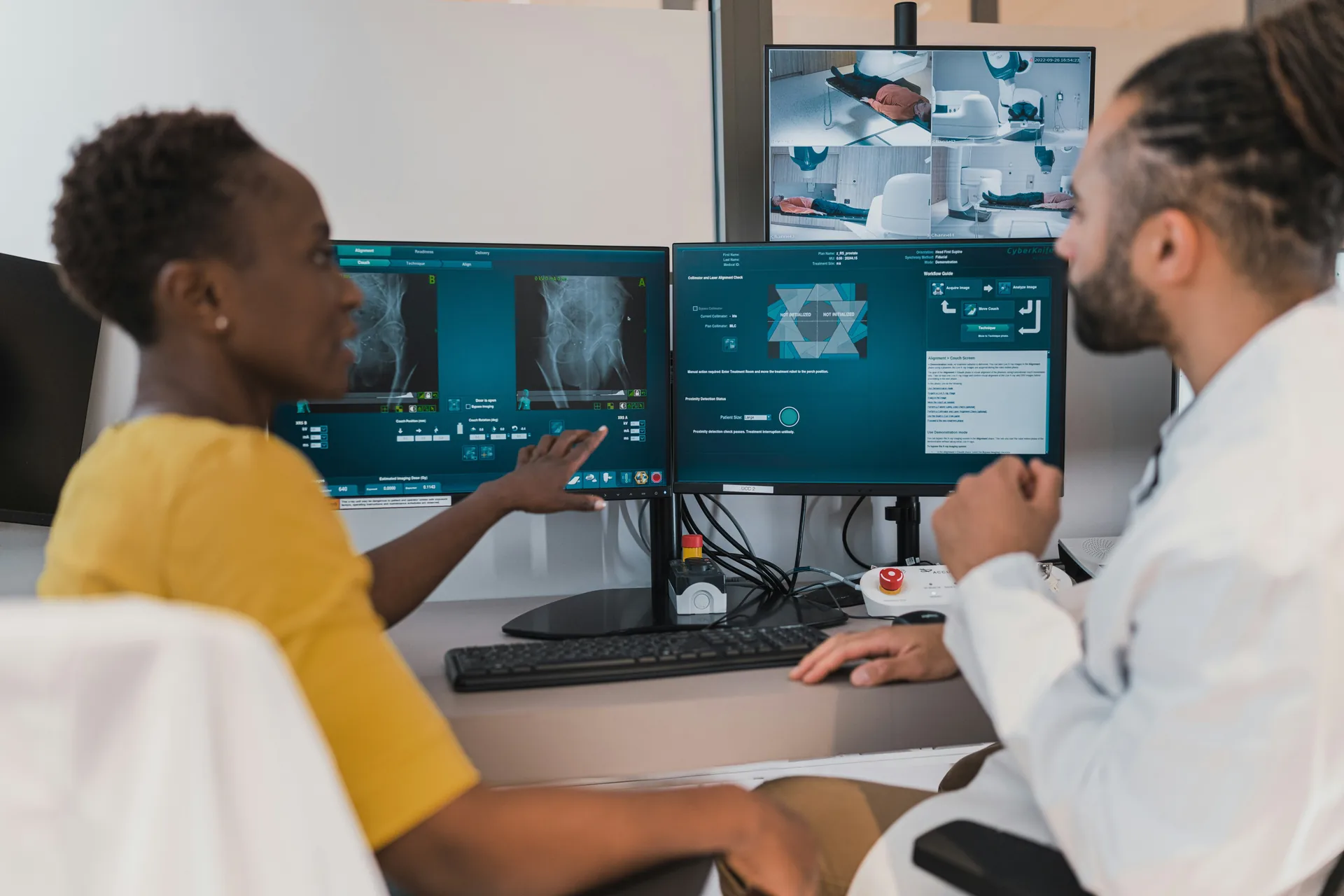
Running a hospital today means working on more than one operation at once, including handling the large crowds outside a doctor’s cabin, patients waiting for test reports, and families of the affected ones unclear about how the insurance policies are used. These are just the basic challenges, but when the talk comes down to the complete workflow of a hospital, there are a lot of challenges to look at.
These challenges are not easy to work with, and finding a hospital management system that addresses all of these challenges is even more challenging. Hence, at Medinous, we make sure the platform is specifically designed for hospitals. This blog breaks down the most common obstacles administrators face and the practical ways technology can help resolve them.
Why Effective Hospital Administration Matters
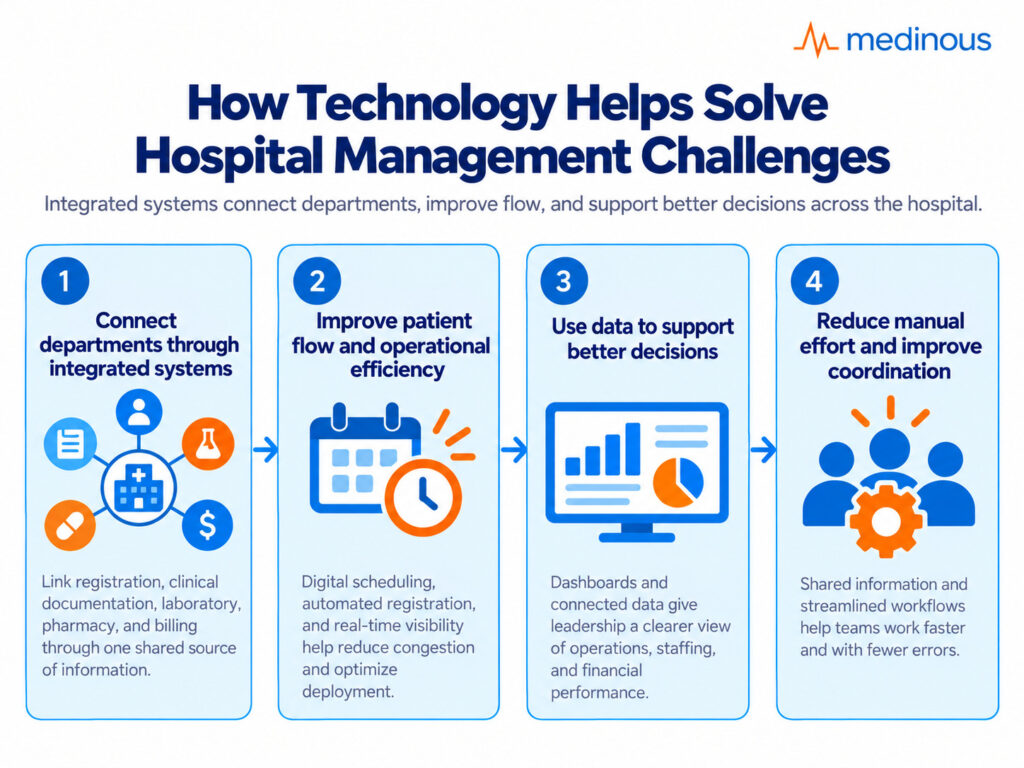
Every part of patient care ultimately depends heavily on administrative systems running smoothly behind the scenes. Registration, scheduling, billing, and inventory may not be visible to patients. Still, when any of them break down, the impact is felt immediately in longer waits, billing errors, or supply shortages.
Strong administration is what allows clinical teams to focus on care instead of chasing down information or resolving avoidable and preventable delays. As healthcare organizations grow more complex, hospital operational efficiency has become a defining factor separating facilities that scale well from those that struggle under their own weight.
Common Challenges in Hospital Administration
Here is a list of the common challenges in hospital administration:
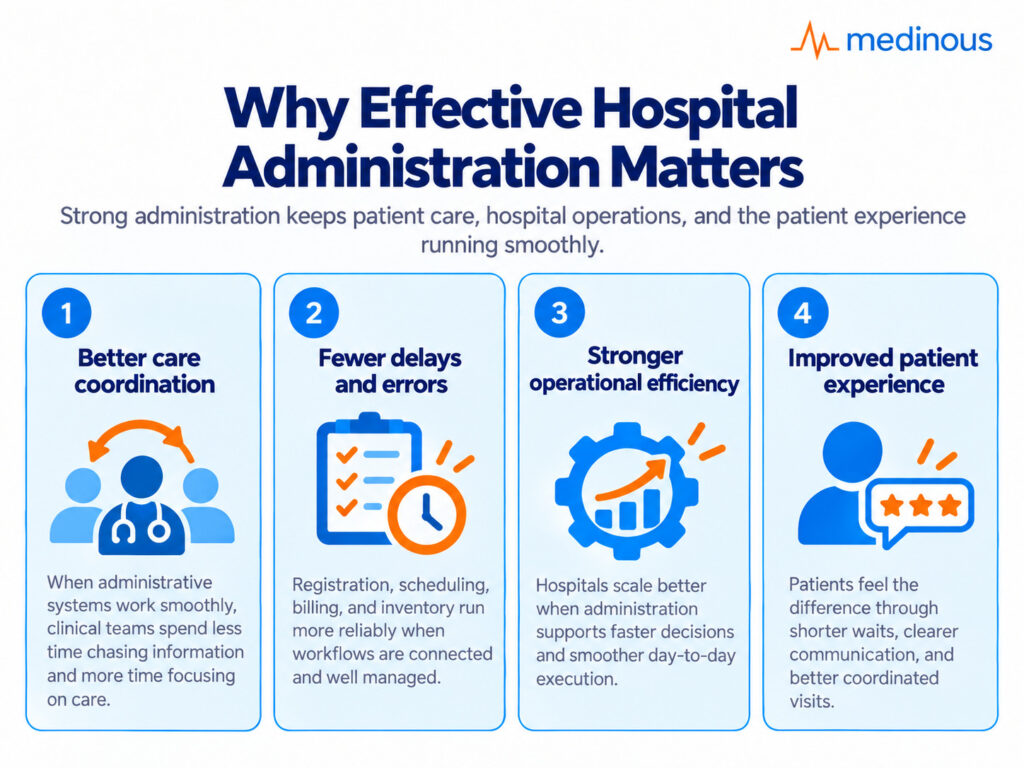
Disconnected Departments and Workflows
Many hospitals still operate with separate systems for registration, laboratory, pharmacy, and billing, none of which communicate with each other well. Miscommunication between roles, from surgeons to coders to support staff, has been linked to a significant share of serious patient safety incidents, underscoring how much is genuinely at stake when departments do not share information smoothly. When information has to be manually re-entered at every handoff, delays and errors multiply.
Inefficient Patient Flow and Long Waiting Times
Congested waiting rooms and unpredictable patient flow remain a persistent pain point for hospital administrators. Without visibility into how patients are moving between departments, it becomes difficult to anticipate bottlenecks before they affect care.
Limited Visibility into Hospital Operations
Administrators often make decisions with incomplete information because data lives in separate systems that are not connected. Without a unified view of bed occupancy, staffing levels, and resource use, leadership ends up reacting to problems rather than anticipating them.
Manual Processes and Administrative Workload
Paper forms, spreadsheets, and manual data entry continue to consume enormous amounts of staff time in many facilities. This administrative burden pulls skilled staff away from higher-value work and increases the likelihood of errors, particularly in areas like billing and insurance processing where accuracy directly affects revenue.
These challenges rarely exist in isolation from one another. A hospital struggling with disconnected departments often finds that its patient flow problems and visibility gaps are simply symptoms of the same underlying issue: information that does not move freely between the people who need it.
cAddressing one challenge without considering the others tends to produce only short-term relief, which is why many hospital management challenges and solutions conversations now center on integrated platforms rather than isolated fixes for individual departments.
How Technology Helps Solve Hospital Management Challenges
Technology works like both a great aid and a curse. It depends on the way you make use of it. Let us look at how technology helps solve hospital management challenges:
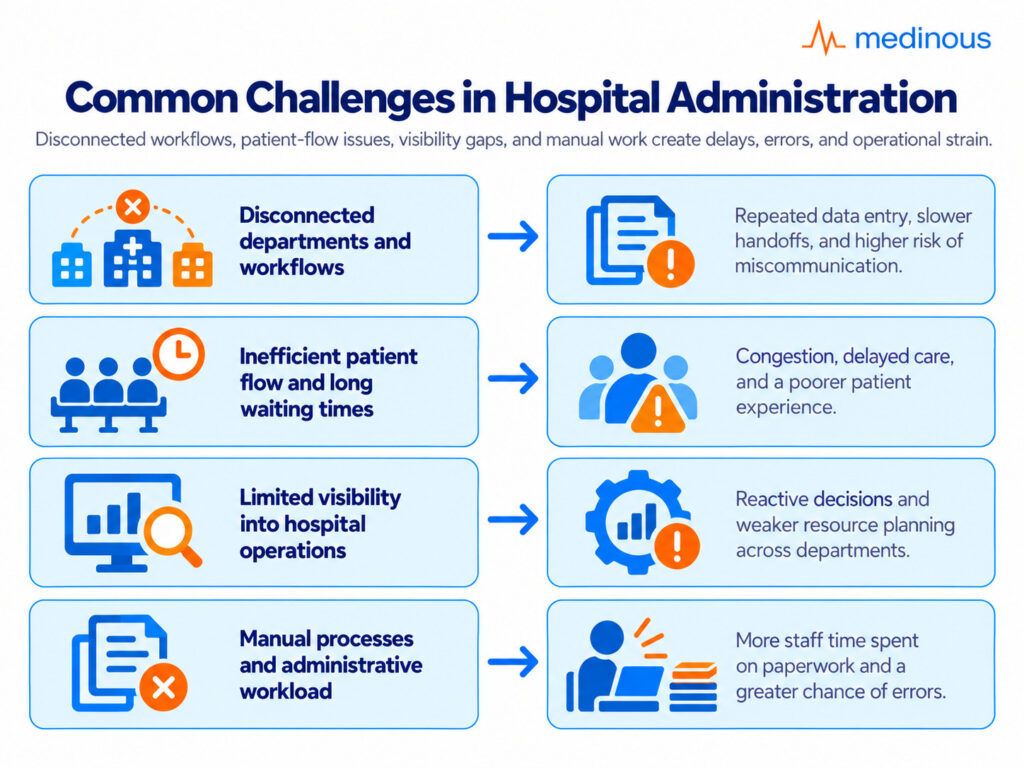
Connecting Departments Through Integrated Systems
A unified patient management system that links registration, clinical documentation, laboratory, pharmacy, and billing removes the need for repeated manual entry. It gives every department access to the same, accurate information. When departments share one connected system instead of isolated tools, handoffs become smoother, and the risk of miscommunication drops considerably.
Improving Patient Flow and Operational Efficiency
Digital scheduling, automated registration, and real-time visibility into department loads allow administrators to anticipate congestion rather than respond to it after the fact. This kind of proactive management is what ultimately drives hospital operational efficiency, since staff can be deployed where they are needed most instead of being spread thin reactively.
Using Data to Support Better Decisions
Centralized data gives hospital leaders a much clearer, more current picture of what is actually happening across the entire organization, from bed availability to staff utilization to financial performance. Instead of relying on periodic manual reports, administrators can access near real-time dashboards that highlight where attention is needed, allowing for faster and better-informed decisions.
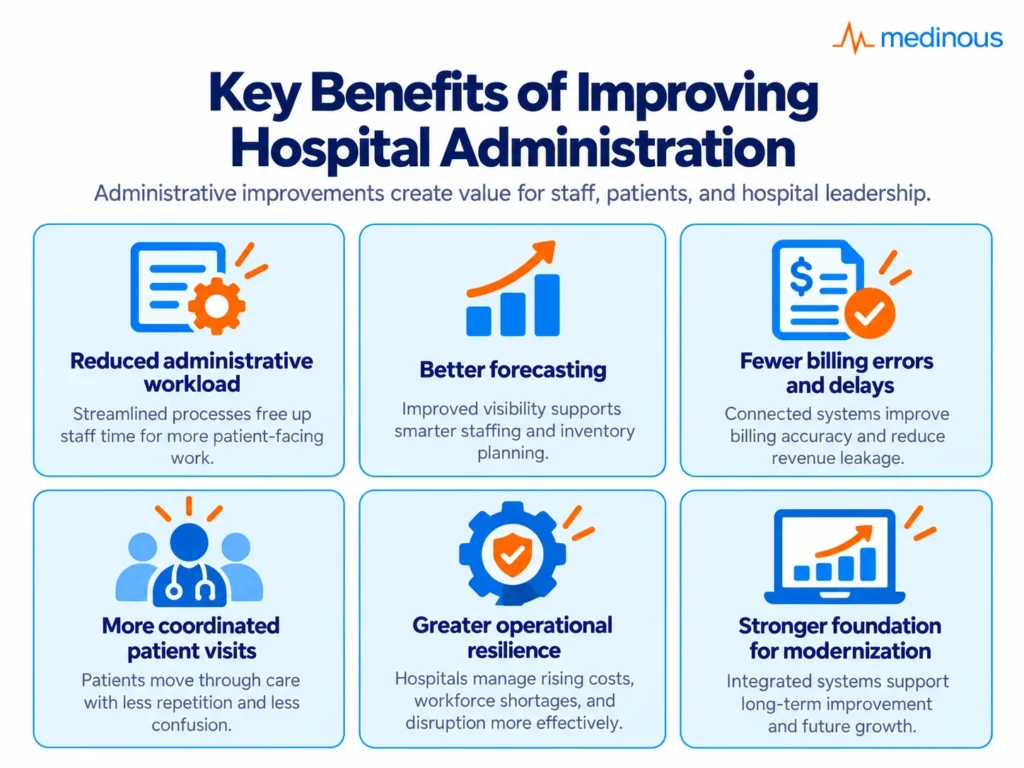
Key Benefits of Improving Hospital Administration
Addressing these administrative challenges can help hospitals improve efficiency while creating a smoother experience for both staff and patients:
- Reduced administrative workload: Streamlined processes free up staff time for more patient-facing work.
- Better forecasting: Improved data visibility helps hospitals plan staffing and inventory more accurately.
- Fewer billing errors and delays: Connected systems can reduce billing issues that often frustrate patients and finance teams.
- More coordinated patient visits: Patients can enjoy a smoother experience without repeatedly providing the same information throughout their care journey.
- Greater operational resilience: Efficient administration can help healthcare facilities manage rising costs, workforce shortages, and cybersecurity concerns.
- Stronger foundation for modernization: Modern administrative systems can help facilities manage these pressures while maintaining care quality.
What to Look for in a Hospital Management System
Choosing the right platform can help hospitals address administrative challenges without adding another disconnected tool. Consider the following factors:
- Integrated workflows: Look for a system that connects registration, clinical, and financial workflows instead of relying on integrations between multiple vendors.
- Deployment options: Consider whether you need a cloud vs. on-premises clinic system, as the choice can affect cost, control, and scalability.
- Reporting and analytics: Choose a platform with strong reporting capabilities so hospital leadership can turn connected data into useful insights and informed decisions.
- Ease of use: Prioritise intuitive workflows that staff can understand and use confidently. A feature-rich system will not deliver its full value if employees find it difficult to navigate.
- Vendor support: Evaluate the responsiveness of the vendor and the level of support available during and after implementation.
- Relevant experience: Look for a platform with experience supporting hospitals of a similar size and specialty to yours.
- Implementation and training: Ask how the vendor handles implementation, staff training, and the transition to the new system. Proper training can help staff adapt to the platform more confidently.
- Customer references: Request references from hospitals that have completed a similar transition. Ask how the vendor handled the rollout period, as this can provide useful insight into the support you can expect after the application goes live.
- Explore the platform: If you want to see how a connected, purpose-built platform can address these challenges, you can request a demo with the Medinous team and explore how the system fits your hospital’s specific operations.
- Build for long-term needs: Hospital administration will always involve complexity, but challenges such as disconnected departments, inefficient patient flow, limited visibility, and manual workloads can be addressed through the right combination of processes and technology.
- Prepare for the future: Investing in integrated systems can help facilities build an operational foundation that supports changing patient expectations and the evolving healthcare landscape.
Administrators who start small, addressing the most disruptive bottleneck first rather than attempting a complete overhaul all at once, tend to see faster wins and stronger buy-in from staff. Those early wins build the confidence and momentum needed to tackle the larger, organization-wide changes that lasting, sustainable improvement in hospital administration ultimately requires over time.